

Blogs
Mulberry Silk vs Satin Eye Mask: Which One Is Really Worth?
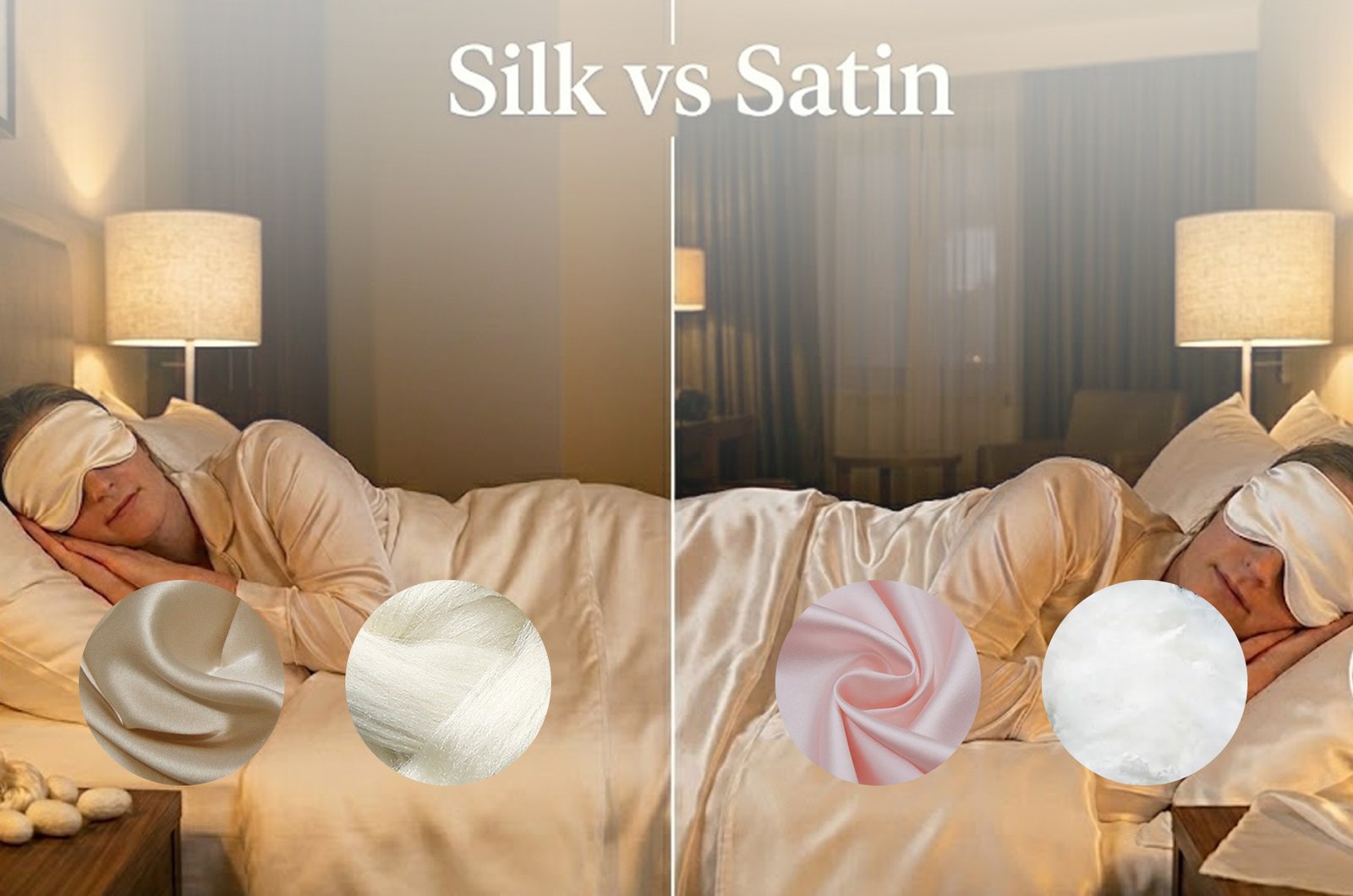
Walk into any beauty store or scroll through Amazon, and you’ll find hundreds of silk eye masks. Some cost $9, 19. They all look shiny and smooth, so what’s the difference? The truth is, many of those affordable silk masks aren’t silk at all. They’re polyester satin masquerading as luxury fabric.
If you care about your skin, your hair, or simply getting a comfortable night’s sleep, understanding the difference between mulberry silk and satin silk is crucial. This article isn’t just about fabric—it’s about whether your eye mask is helping your beauty routine or silently sabotaging it. Let’s cut through the marketing fluff and find out which one is actually worth your money.
1.What Is Mulberry Silk? Understanding the “Real” Silk
Before you can judge which eye mask is better, you need to understand what you’re buying. Mulberry silk is the gold standard of silk fabrics—the real deal produced by silkworms, not factories mixing chemicals.
1.1 The Production Process: From Bombyx Mori to Fabric
Mulberry silk comes from the Bombyx mori silkworm, which feeds exclusively on mulberry tree leaves. This controlled diet produces the finest, purest silk fibers on earth. After the silkworms spin their cocoons, the silk filaments are carefully unreeled in a single, continuous strand. A single cocoon can yield a filament up to 1,600 meters long. These long-strand fibers are what give mulberry silk its legendary smoothness and durability—there are no short, broken fibers to poke out and cause friction.
1.2 Why 6A Grade and Momme Weight Matter
Not all mulberry silk is equal. The highest quality is 6A grade, which refers to the long, uniform, unbroken strands of the silk filament. Lower grades like 3A or 4A use shorter fibers that are more prone to pilling and roughness.
Then there’s momme weight (mm) —think of it as the thread count for silk. A standard 16 momme eye mask is lightweight; 19 momme is good; 22 momme is luxurious and dense. Most premium sleep masks use 19-22 momme because it strikes the perfect balance of opacity, softness, and longevity. Anything below 16 momme is too flimsy to block light effectively.
1.3 Hypoallergenic Properties and Natural Protein Structure
Mulberry silk is naturally composed of fibroin and sericin proteins. This protein structure makes it resistant to dust mites, mold, and mildew—a blessing for allergy sufferers. The fabric is also free of the chemical irritants found in synthetic textiles, making it a truly hypoallergenic choice for sensitive skin.
2. What Is Satin Silk? Don’t Fall for the Marketing Trap
Here’s where things get tricky, and where millions of shoppers get fooled. When you see “satin silk eye mask” written on a label, you need to read very carefully. Most often, this is a masterclass in linguistic deception.
2.1 Satin Is a Weave, Not a Fiber
This is the most critical fact to understand: Satin is a weaving technique, not a raw material. Satin refers to the way threads are woven together to create a glossy front surface and a dull back. You can make satin out of silk (which is wonderful), but you can also make it out of polyester, nylon, or rayon.
The vast majority of cheap “silk eye masks” are actually polyester satin. Polyester is a plastic derived from petroleum. Manufacturers use a satin weave on polyester threads, create a glossy finish, and then legally call it “satin silk” because the word “satin” describes the weave, and “silk” has become a generic term for softness in the textile industry. This is completely legal but deeply misleading.
2.2 Why Satin Can Trap Heat
Your skin knows the difference even if your eyes don’t. Polyester satin often has a slick, almost slippery feel that’s noticeably synthetic. More importantly, polyester is not breathable. It’s essentially wrapping your eye area in plastic. Natural mulberry silk is a temperature regulator, allowing air to circulate and heat to escape. Polyester satin traps body heat, leading to sweaty, uncomfortable sleep—exactly what you don’t want pressed against your delicate eye area.
2.3 Visual Gloss vs. Genuine Luster
Place a polyester satin mask next to a mulberry silk one, and the light behaves differently. Polyester satin has a high-shine, almost mirror-like gloss that can look cheap under bright light. Mulberry silk has a subtle, pearlescent luster that seems to glow from within the fabric rather than reflecting off the surface. This genuine luster is a hallmark of natural protein fibers and something synthetics cannot truly replicate.
3. Head-to-Head Showdown: Benefits for Skin, Hair, and Sleep
Now we get to the real battle. You’re buying an eye mask for a reason—probably for beauty sleep. Here’s how the two fabrics perform where it counts.
| Feature | 100% Mulberry Silk | Polyester Satin |
|---|---|---|
| Material | Natural protein fiber from silkworms | Synthetic petroleum-based polyester |
| Breathability | Highly breathable, temperature regulating | Not breathable, traps heat |
| Moisture Absorption | Absorbs and wicks moisture | Repels moisture, leaves skin damp |
| Skincare Retention | Does not absorb facial oils or creams | Can pull moisture and product from skin |
| Hair/Friction | Ultra-low friction, prevents creases | Low friction (when new), increases with wear |
| Durability | Lasts years with proper care | Prone to pilling and snagging within months |
| Best For | Anti-aging, sensitive skin, lash extensions | Short-term travel, disposable use |
3.1 Does Fabric Really Absorb Your Skincare?
Here’s a scenario: you apply an expensive retinol night cream, slip on your eye mask, and go to sleep. What happens next depends entirely on your mask’s fabric.
Cotton and other plant-based fabrics are absorbent—they’ll soak up your skincare products, wicking them away from your face. Polyester satin doesn’t absorb the product, but it doesn’t let your skin breathe either, creating a occlusive barrier that can trap sweat and oil against your skin. Mulberry silk is the Goldilocks solution: it won’t absorb your expensive serums and creams, but it allows your skin to breathe naturally. The natural proteins in silk contain 18 amino acids that are actually beneficial to skin health.
3.2 Eyelash Extension Safety and Sensitive Skin
If you have eyelash extensions, your eye mask choice is critical. Cotton masks are notorious for catching and pulling out lash extensions—each little fiber is like a tiny hook. Polyester satin is smoother and better than cotton, but 100% mulberry silk is the gold standard for lash safety. The long, continuous silk filaments create a surface so smooth that lashes glide over it without catching. For sensitive skin conditions like eczema or blepharitis, mulberry silk’s hypoallergenic and antimicrobial properties make it the safest choice.
3.3 Temperature Regulation: Cooling Sensation vs. Night Sweats
This is where the difference is most immediately felt. Mulberry silk is naturally thermoregulating. It keeps you cool when it’s hot and warm when it’s cold, just like a natural thermostat for your face. This is why silk pillowcases are recommended for hot sleepers and menopausal women.
Polyester satin has no such properties. It traps heat and creates a sweaty microclimate around your eyes and temples. Many users of cheap satin masks report waking up with damp, irritated skin around their eyes—a complete failure for a product designed to enhance beauty sleep.
4. Durability and Care: Which One Lasts Longer?
An eye mask is an investment. When you calculate cost per wear, durability matters enormously.
4.1 Hand Wash vs. Machine Wash
| Care Aspect | Mulberry Silk | Polyester Satin |
|---|---|---|
| Washing Method | Hand wash cold only | Machine washable (gentle cycle) |
| Detergent | Silk-specific or baby shampoo | Any mild detergent |
| Drying | Lay flat, away from sun | Can often tumble dry low |
| Bleach | Never—dissolves the protein | Generally safe with color-safe bleach |
| Frequency | Every 1-2 weeks | Weekly |
Polyester satin wins on convenience—you can toss it in the washing machine without worry. Mulberry silk requires more delicate care: hand washing in cold water with a silk-specific detergent and air-drying flat, away from direct sunlight which can degrade the fibers.
But here’s the trade-off: a washable silk eye mask made from high-quality mulberry silk, when properly maintained, will retain its softness and sheen for years. Polyester satin, especially cheaply made versions, tends to pill, snag, and lose its glossy coating after just a few months of regular washing.
4.2 Pilling and Snagging
Imagine using both masks nightly for 6 months with regular washing. The mulberry silk mask, with its long-strand fibers, will have developed a slightly softer hand but no significant pilling. The polyester satin mask will likely show pilling—those tiny balls of tangled fiber—especially along the stitching and where it makes contact with your pillow. These pills create rough spots that increase friction against your skin, defeating the entire purpose of a “silk” eye mask.
5. Are You Overpaying for “Fake” Silk?
Price is the most deceptive variable in this equation. When you see two “silk” masks at vastly different prices, you’re not necessarily seeing a bargain versus a luxury markup. You’re often comparing two completely different products.
5.1 Drugstore Satin vs. High-End Mulberry
| Category | Material | Typical Price | Expected Lifespan | Cost Per Month |
|---|---|---|---|---|
| Drugstore “Silk” Mask | 100% Polyester Satin | 38 | 2-4 months | 4.00 |
| Mid-Range “Silk” Mask | Polyester or low-grade silk blend | 18 | 6-12 months | 3.00 |
| Premium Mulberry Silk | 100% 6A Grade, 19-22 Momme | 50 | 3-5+ years | 1.40 |
The math is clear. An affordable silk eye mask isn’t always affordable when you’re replacing it every few months. A genuine mulberry silk mask, while requiring a higher upfront investment, delivers a dramatically lower cost per use over its lifespan. It’s the classic “boots theory” of economics applied to beauty sleep.
5.2 How to Spot a Blend
Shopping on Amazon or similar marketplaces requires detective work. Common deceptive phrases include:
-
“Silk-like fabric” (definitely polyester)
-
“Satin silk” with no fiber content listed (almost always polyester)
-
“Made with silk” (could be 5% silk, 95% polyester)
-
“Charmeuse satin” (this describes the weave; check if it says 100% silk charmeuse)
The only labeling you should trust is an explicit statement like “100% mulberry silk” or “100% silk charmeuse,” ideally with a momme weight specified. If the price seems too good to be true for 100% mulberry silk, it is.
6. How to Spot a Fake: Practical Tests You Can Do
You’ve bought a mask that claims to be silk. Before the return window closes, run these diagnostic tests. These are the same methods textile experts use for mulberry silk identification.
6.1 The Touch & Warm-Up Test
Rub the fabric firmly between your hands for about 30 seconds. Genuine silk will warm up slowly and feel smooth without being slippery. Polyester will quickly generate static electricity and may feel almost greasy or plastic-like. When you stop rubbing, real silk will retain warmth momentarily; polyester will cool down instantly. This real silk test is the quickest and requires no tools.
6.2 The Chemical Dissolution Test
Snip a few fibers and place them in a small cup with a drop of household bleach. Genuine silk, being a protein fiber, will completely dissolve within a few minutes. Polyester fibers will remain completely intact, floating unchanged in the bleach. This is the gold standard burn test for silk alternative that doesn’t require fire and can be done safely at home.
6.3 Reading the Label: 100% Mulberry vs. “Silk-Like”
In many countries, textile labeling is legally regulated. A label that says “100% silk” must be exactly that. But “satin silk,” “silky,” “silk touch,” or “art silk” (artificial silk) are all red flags for polyester or rayon. Look for the composition tag, not the marketing name on the front of the package. The fiber content legally has to be listed somewhere—find it.
7.Top 3 Recommendations for Every Budget
Based on material testing, user reviews, and durability assessments, here are the picks that deliver on their promises.
7.1 The Pure Luxury Pick
For the discerning user who wants the absolute best luxury sleep gift for themselves or someone special, look for a mask made from 100% 6A grade mulberry silk at 22 momme. This thickness blocks out light completely without the need for inner foam padding, which can break down over time. The silk should be on both sides, with a smooth, adjustable strap that won’t catch hair. Brands that transparently disclose their silk grade and momme weight are the ones to trust.
7.2 Satin Masks That Miss the Mark
Any mask under $8 that claims to be “silk” should be treated as polyester satin until proven otherwise. Pay special attention to masks with colored interior padding—this is often cheap foam wrapped in synthetic fabric. Avoid anything with a strong chemical smell out of the packaging, a sure sign of synthetic dyes and polyester. These masks don’t just underdeliver; they can actually irritate your skin and trap heat.
8. Which One Should You Actually Buy?
After examining the materials, benefits, durability, and true costs, the verdict in this silk eye mask review is clear.
8.1 Who Should Stick with Satin?
Polyester satin masks have exactly one virtue: disposability. If you’re traveling and prone to losing things, or need a temporary mask for a single trip, a cheap $5 satin mask makes sense. They’re also acceptable if you’re simply experimenting with sleep masks for the first time and aren’t sure you’ll stick with the habit. But for regular, nightly use, the breathability and durability issues make them a poor investment.
8.2 Why Mulberry Silk Is the Only Choice for Skincare?
If you use expensive skincare products, have eyelash extensions, suffer from dry or sensitive skin, or simply want to wake up without sleep creases on your face—mulberry silk is worth it. It’s not a luxury splurge; it’s a functional tool that protects your skin, hair, and comfort for 8 hours every night. When you calculate the cost per use and consider the skincare benefits, genuine mulberry silk isn’t the expensive option. The real waste of money is paying anything at all for a piece of polyester that fails to do the job.
The choice is ultimately simple: invest in one genuine mulberry silk eye mask, care for it properly, and let it serve your beauty sleep for years. Your skin—and your wallet, in the long run—will thank you.
FAQ
1. What is the difference between mulberry silk and satin eye masks?
Mulberry silk is a natural protein fiber; satin is a synthetic weave, usually polyester. Silk breathes and hydrates; satin traps heat and friction.
2. Are satin silk eye masks good for eyelash extensions?
Yes, satin is smooth and snag-free, but mulberry silk is superior because it wicks away moisture, making extension adhesive last even longer.
3. Does a mulberry silk eye mask really prevent wrinkles?
Yes, its ultra-smooth surface reduces friction and tugging on the delicate under-eye skin, significantly minimizing sleep creases compared to cotton.
4. How do I wash a 100% mulberry silk eye mask?
Hand wash in cold water with silk-specific detergent or baby shampoo. Never wring, bleach, or tumble dry; lay flat to dry only.
5. Is it worth paying more for mulberry silk?
Yes, because of the protein structure, temperature regulation, and skin hydration benefits; a high-grade mask can last years with proper care.